Anthropic makes Claude, sold both as a consumer subscription and as an API charged per million tokens. It is the vendor whose published prices this site has watched move most: the cache read line, which is what you pay to send a model context it has already seen, and a standard price that was scheduled to rise and then did not. Its pricing pages carry unusually specific wording, and we quote it rather than summarise it.
A new paper testing CT scan labeling finds a free-form agent running Claude Opus 5.5 outscored an automated review harness on most of six public datasets.
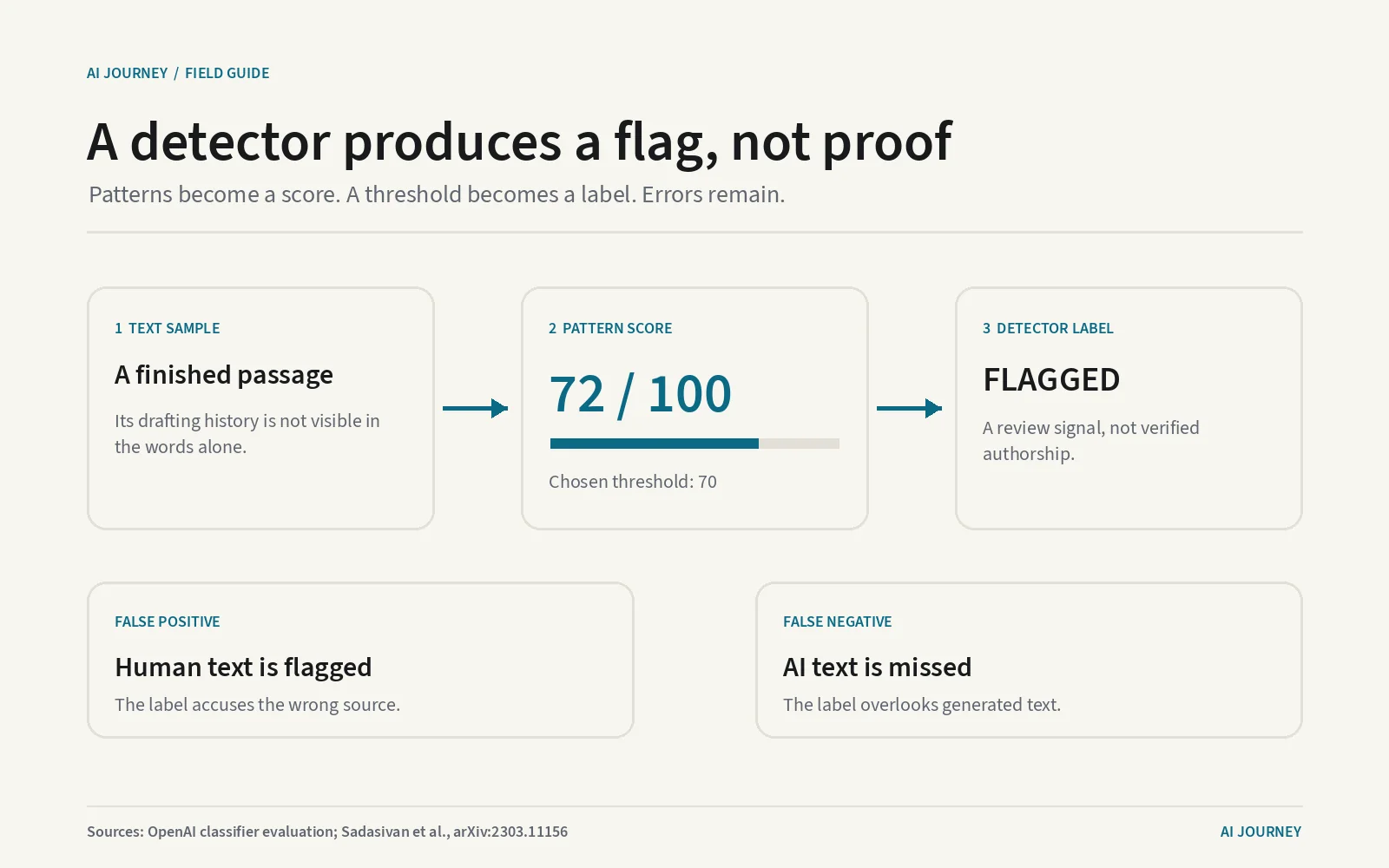
AI text detectors can flag patterns associated with machine-written text, but their score is not proof of authorship. They can miss AI text and accuse human writers. OpenAI withdrew its own classifier for low accuracy, and published research shows paraphrasing can sharply weaken several detection methods. Use a score only as a reason to review evidence.
Claude API pricing is usage based. Anthropic charges separate rates for input tokens, cache writes, cache reads and output tokens, with each model carrying its own rate. A small team should estimate a real workflow, include rate and spend limits, and keep Claude Pro subscription costs separate.
Claude usage limits are rolling allowances, not a fixed number of messages. Anthropic says the amount varies with message length, attachments, model, feature and capacity. Session limits reset every five hours, while paid plans can also have weekly limits. Pro, Max and Team raise access but do not promise unlimited use.
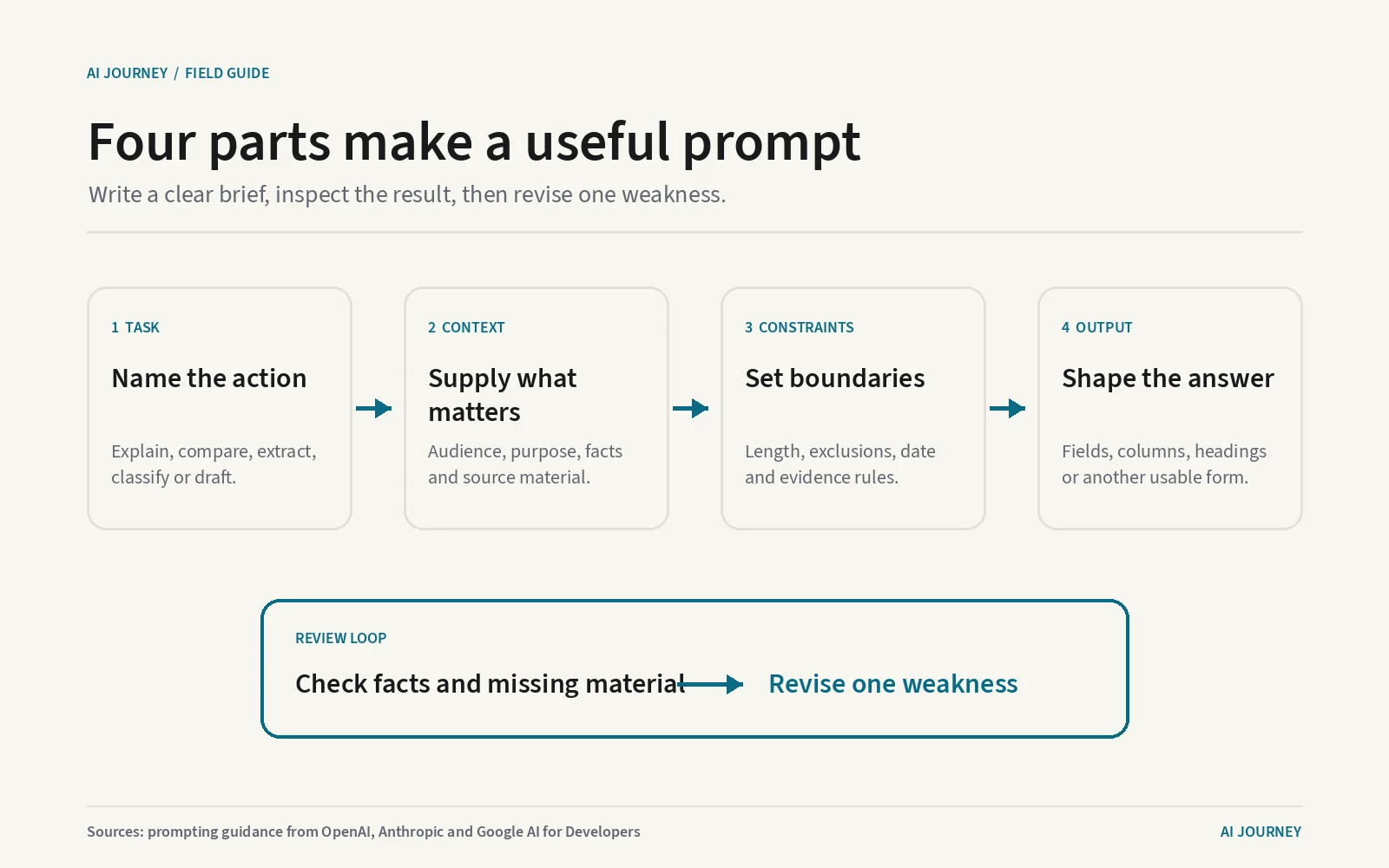
A good AI prompt names the task, supplies relevant context, states constraints and describes the output you want. Add an example when format or judgment is hard to explain. Then inspect the result and revise one weakness at a time. Clear evidence and a review step matter more than clever prompt phrases.
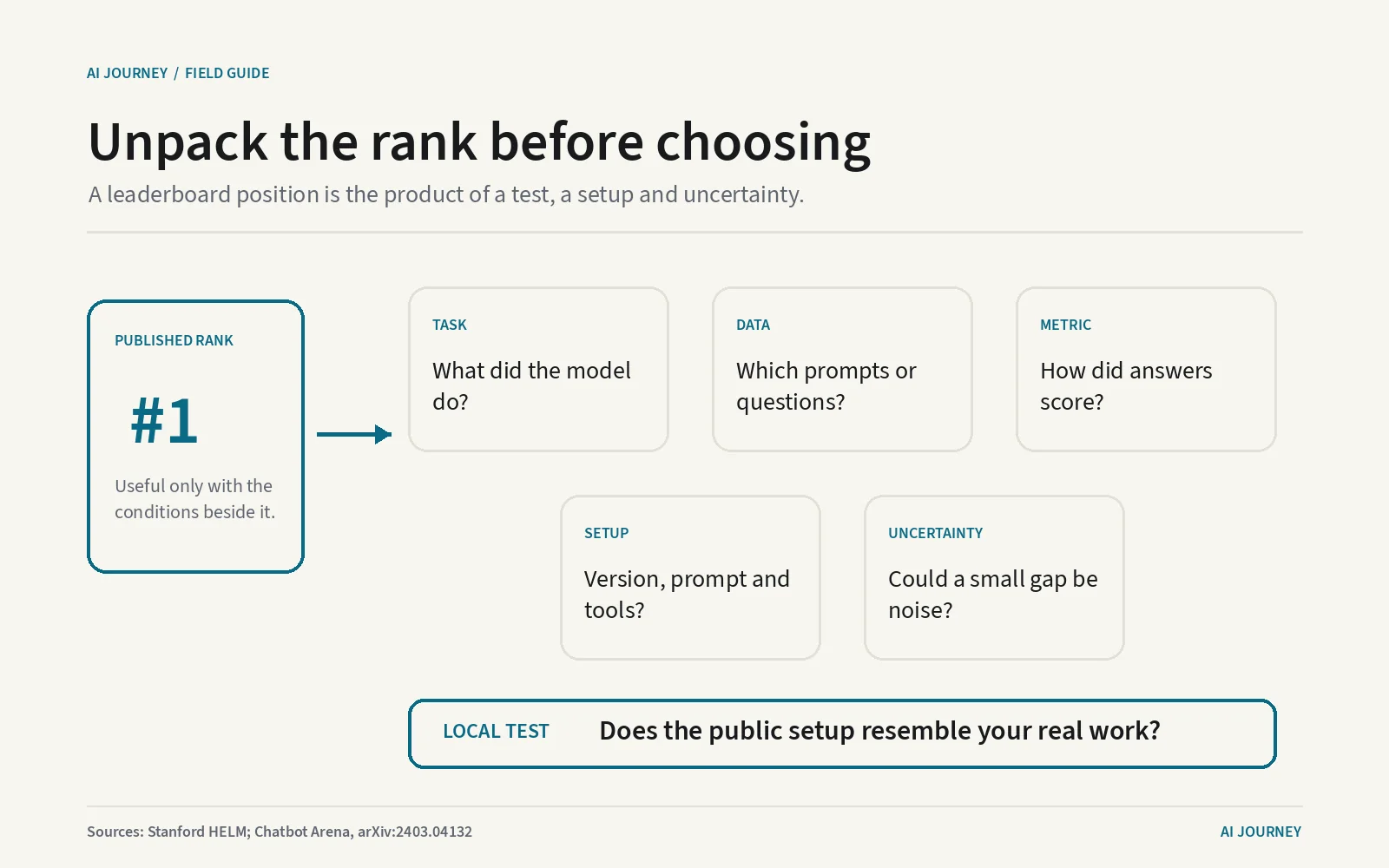
Read an LLM leaderboard by checking the task, dataset, metric, model version and test conditions before the rank. Look for uncertainty and possible training-data overlap, then ask whether the test resembles your work. A one-point lead on one benchmark is evidence about that setup, not proof that a model is best for everyone.
An AI token is a small piece of text that a model reads or writes. It can be a whole short word, part of a longer word, punctuation or a space. Token counts matter because they set how much fits in a model's context window and how much an API request costs.
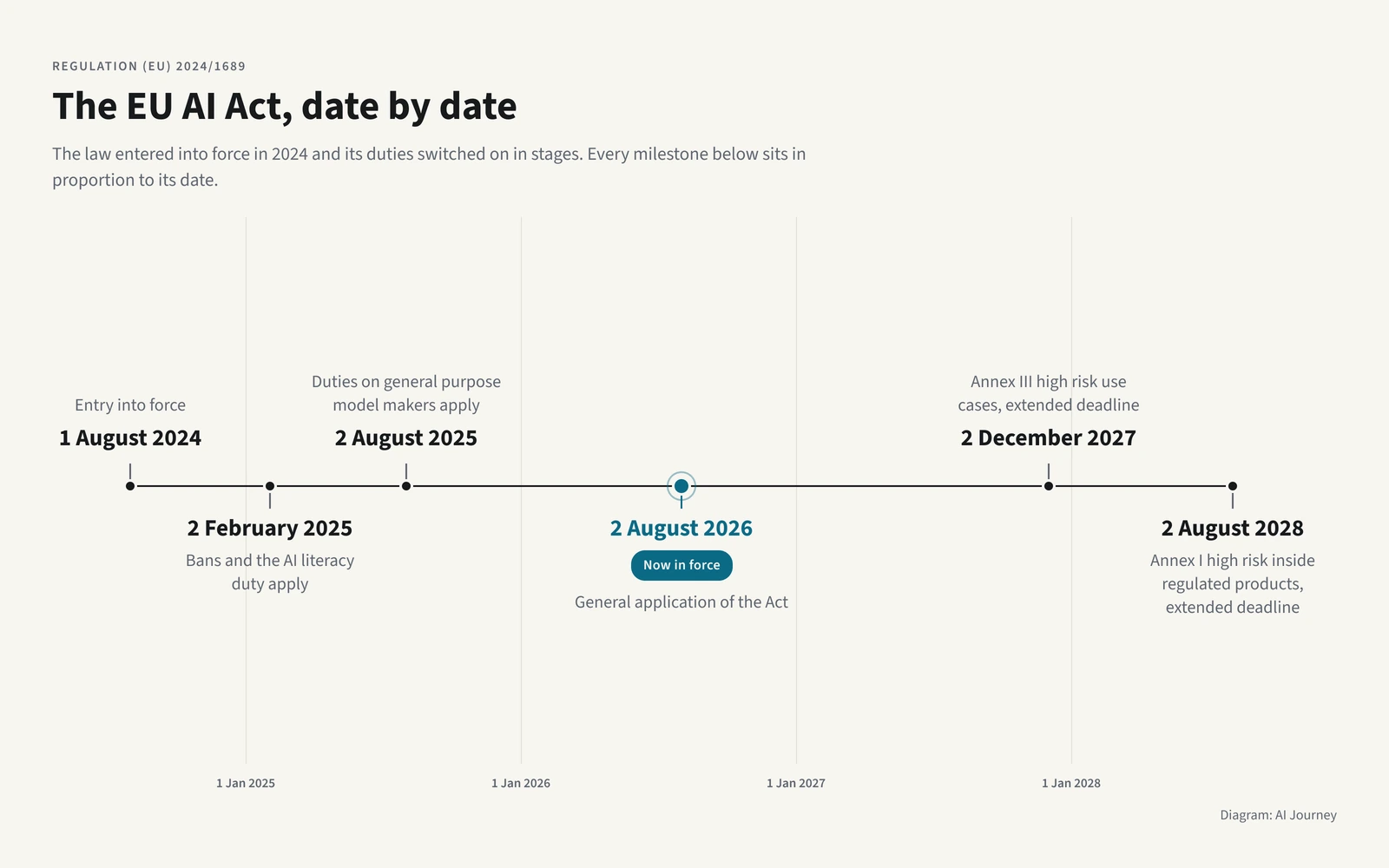
The EU AI Act is the European Union's law for artificial intelligence. It sorts uses of AI by risk, bans a short list outright, regulates the risky uses heavily, and asks little of the rest. Its duties fall on the companies that build and deploy AI. A person who simply uses a chatbot gets protections, not obligations.
AI vendors sell models by the token, a text unit of roughly three quarters of an English word. You pay one rate for the text you send in, a higher rate for the text the model writes back, and a steep discount on input the vendor has recently processed and cached. Every rate is quoted per million tokens.
Read a model announcement back to front. The benchmark table is the seller grading its own exam. The pricing line is the sentence with a unit attached, so it is the easiest to hold to account. The availability line tells you whether any of it reaches the product you actually pay for, and when.
A context window is the amount of text a model can hold in mind at once, measured in tokens. On the OpenAI, Anthropic and Google pages this guide reads, published windows run from 200,000 tokens up to just over a million. When a conversation outgrows the window, the model starts losing the beginning, which is why long chats drift.
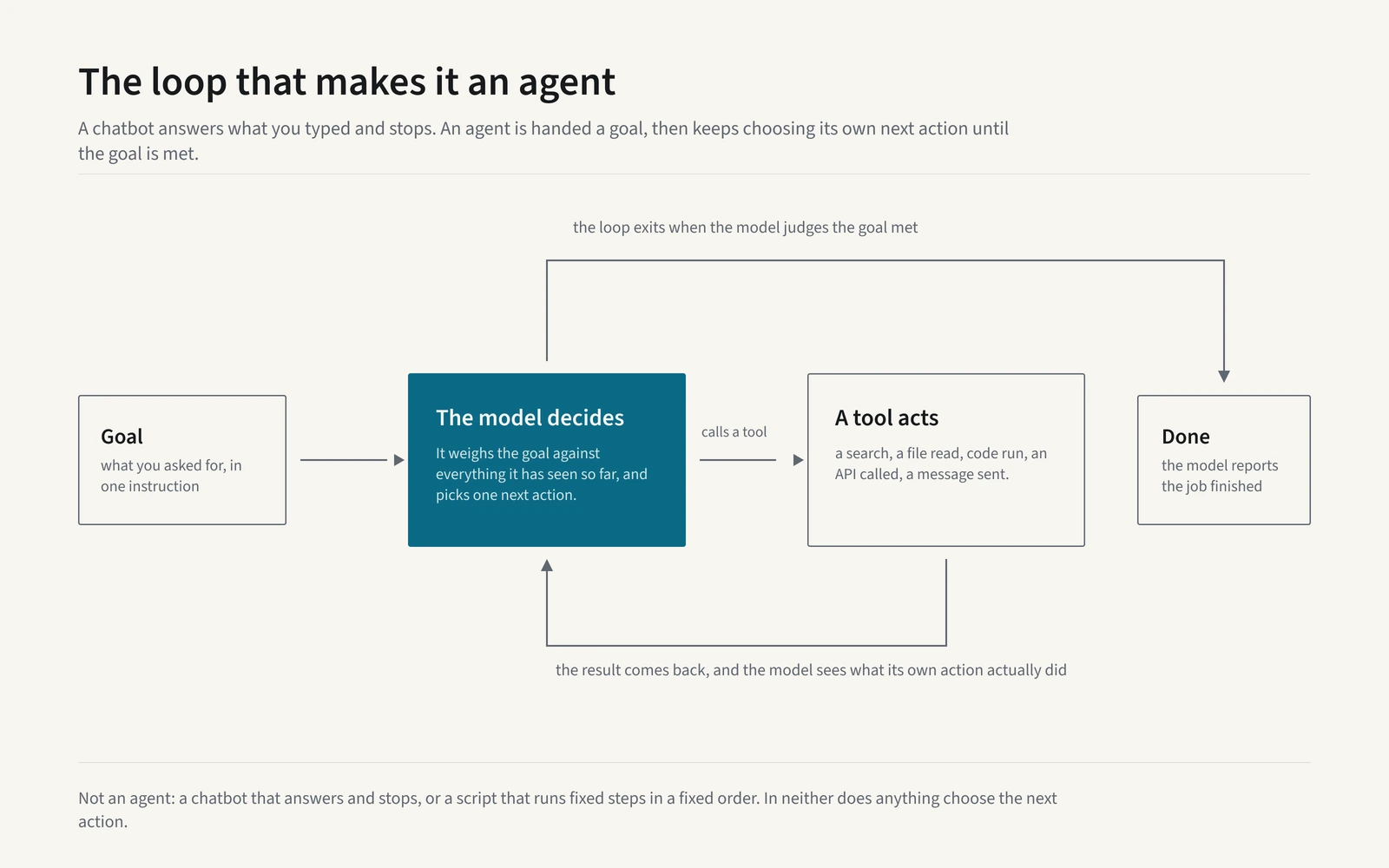
An AI agent is software that gives a language model a goal, lets it choose its own next action, run tools, read the result and go again until the job is done. A chatbot answering the question you just typed is not an agent, and neither is a script that follows fixed steps.